

You are here: Home » High-Protein Udon Noodles » Plain High-Protein Udon Noodles
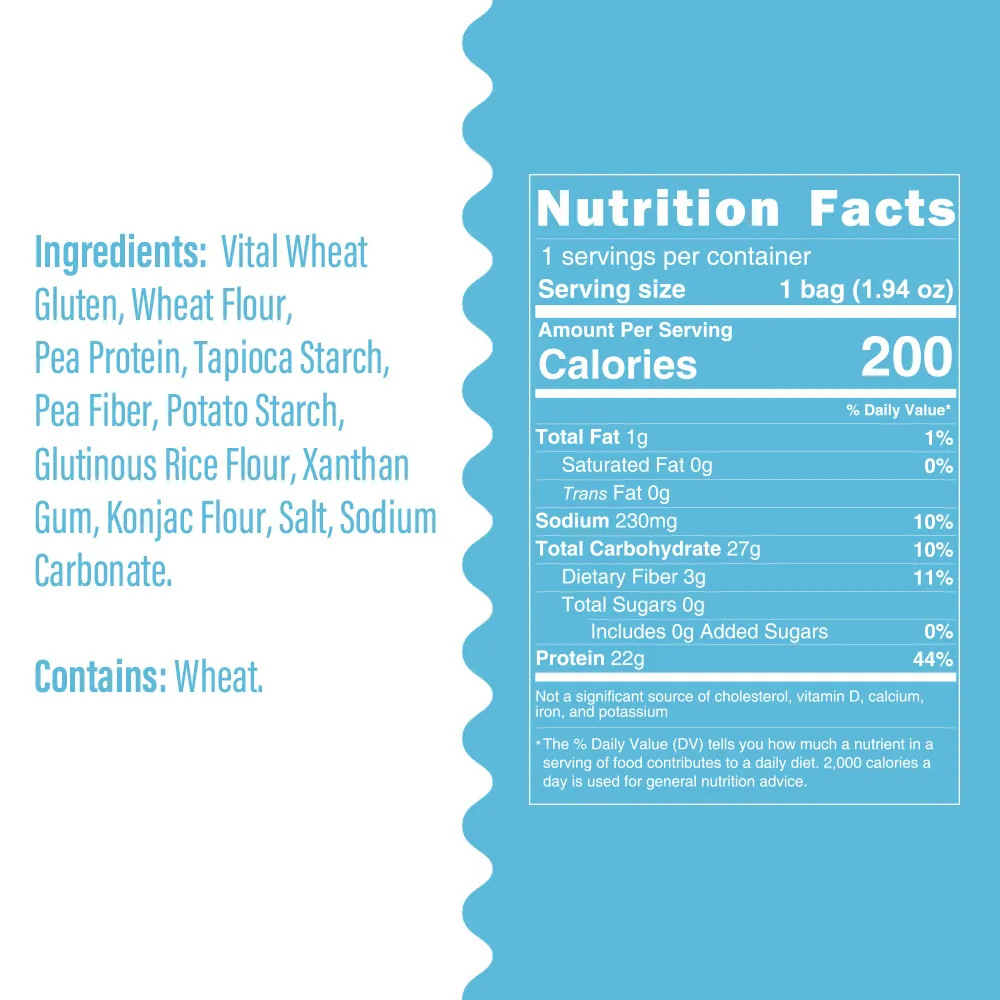
Elevate your fitness journey with Hethstia’s High Protein Udon Noodles. Each 55g serving is a nutritional powerhouse, delivering a massive 22g of protein and only 1g of fat. Crafted with a premium blend of vital wheat gluten and pea protein, these noodles are designed for muscle recovery without the heavy carb load of traditional pasta.
Despite the high protein content, they maintain a remarkably thick and elastic texture. Whether you are prepping a post-workout meal or a calorie-conscious dinner, our quick-cooking udon provides the perfect balance of 200 Kcal and high-performance nutrition.
Ramen: Vital Wheat Gluten, Wheat Flour, Pea Protein, Tapioca Starch, Pea Fiber, Potato Starch, Glutinous Rice Flour, Xanthan Gum, Konjac Flour, Salt, Sodium Carbonate.
Contains: Wheat, Soy
Net weight: 1.94 oz (55g), or customized packing size.
Shelf life: 18 months.
Storage: Keep in a cool, dry place. Keep away from light and heat.
| Energy | 200 Kcal |
| Carbohydrate | 27g |
| Total fat | 1g |
| Protein | 22g |
| Dietary fiber | 3g |
| Sodium | 230 mg |
| Total Sugars | 0 |
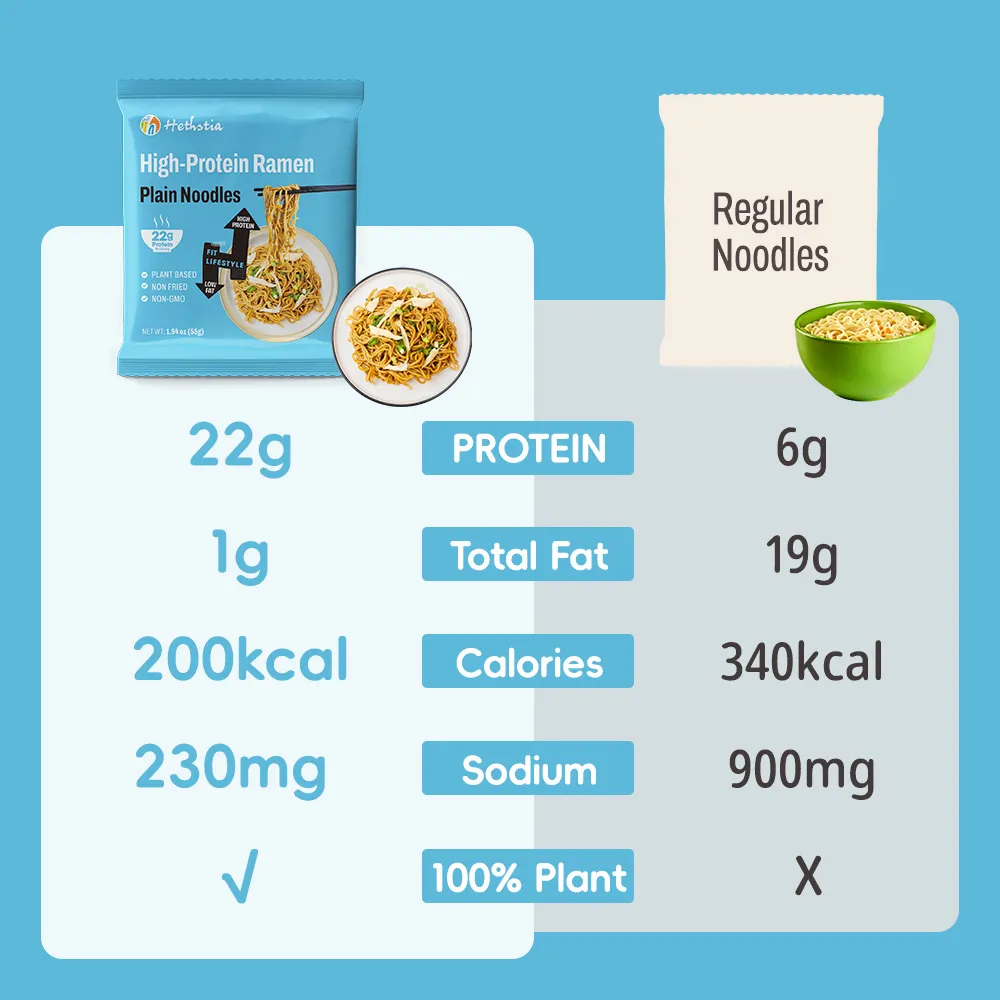
High-Protein Udon Noodles have 4 times the protein of regular noodles, 1/20 the total fat, 58% of the calories, 70% less sodium, and is 100% plant-based.
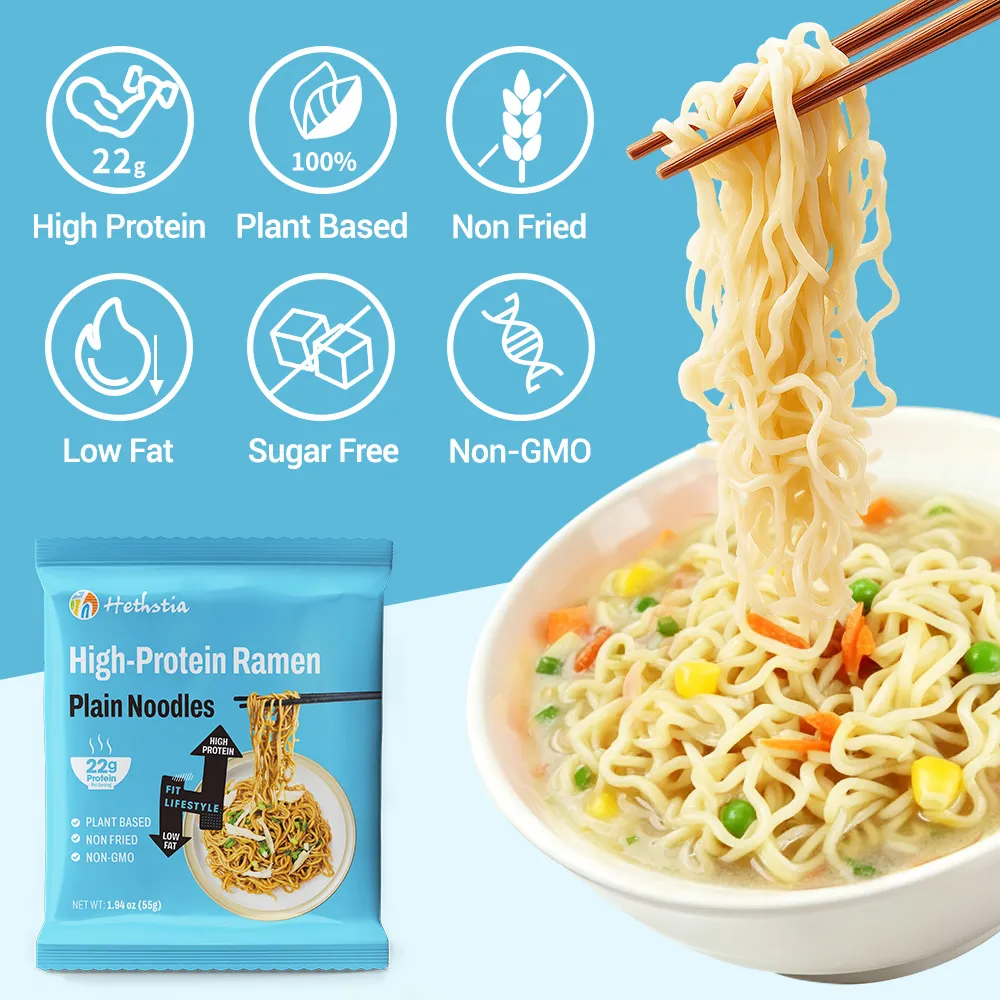
Based in China, Hethstia leads the industry by committing to the production of healthy udon noodles.
Hethstia’s High-Protein Udon Noodles are the ultimate choice for anyone looking to achieve a balanced diet.
Thanks to their low-calorie, high-protein, and low-sodium content, these noodles are also ideal for weight management, satisfying you without the guilt associated with traditional ramen.
Our noodles are compatible with protein-packed vegan recipes and non-GMO ingredients, ensuring that everyone, regardless of dietary preference, can enjoy a great meal.
| Components | Contains (as ingredient or part of ingredient) | May Contain(from processing) | May Contain(in the company) |
| Allergen | Yes/No | Yes/No | Yes/No |
| Cereals(wheat, rye, barley, oats, Buckwheat, spelt etc.or their hybridised strains) | Yes | No | No |
| crustaceans and products thereof | No | No | No |
| Eggs and products thereof | No | No | No |
| Fish and products thereof | No | No | No |
| Peanuts and products thereof | No | No | No |
| Soybeans and products thereof | Yes | No | No |
| Milk and products thereof (including lactose) | No | No | No |
| Nuts, almonds, hazelnuts, walnuts, cashews, pecan nuts, Brazil nuts, pistachio nuts, macadamia nuts, Queensland nuts, and products thereof | No | No | No |
| Celery and products thereof | No | No | No |
| Mustard and products thereof | No | No | No |
| Sesame seeds and products thereof | No | No | No |
| Sulphur dioxide and sulphites at concentrations of more than 10 mg/kg or 10 mg/litre expressed as SO2 | No | No | No |
| Lupin and products thereof | No | No | No |
| Molluscs and products thereof | No | No | No |
Traditional udon noodles are mainly made from wheat flour and usually contain a moderate amount of protein. However, High-Protein Udon Noodles are specially formulated with additional protein ingredients to provide significantly more protein than conventional udon noodles, making them a better choice for consumers looking to increase their protein intake.
High-protein udon noodles are among the most protein-rich options compared with traditional udon varieties. Hethstia High-Protein Udon Noodles are specially developed with a high-protein formula, offering a nutritious noodle solution for fitness enthusiasts, active consumers, and health-conscious brands.
Yes. They provide a healthier alternative to traditional noodles by combining satisfying texture with increased protein content. They are designed to support a balanced diet, active lifestyles, and consumers seeking more nutritious meal options.
These udon noodles may be a suitable option for people managing carbohydrate intake, as protein can help balance meals and promote satiety. However, individuals with diabetes should consider their overall diet and consult their healthcare provider for personalized recommendations.
Noodles that are higher in protein and fiber and lower in refined carbohydrates may have a more balanced nutritional profile. High-protein noodles, konjac noodles, and other functional noodles are popular alternatives for consumers looking for better blood sugar management options.
The healthiness of ramen or udon depends on the ingredients and processing methods. Traditional instant ramen is often fried and higher in fat, while these udon noodles provide increased protein and a more balanced nutritional profile, making them a healthier noodle alternative.
Both rice and noodles can be included in a balanced diet depending on portion size, ingredients, and individual health needs. Noodles with higher protein and fiber content may help create a more balanced meal compared with traditional refined carbohydrate options.
Many people with diabetes choose high-protein and high-fiber noodle alternatives as part of a balanced eating plan. These udon noodles can be included in meals with vegetables, lean proteins, and appropriate portions. People with diabetes should follow guidance from their healthcare professional.
The better choice depends on the nutritional composition of the specific product. Compared with traditional udon or pasta, high-protein versions may provide more protein and better satiety. High-Protein Udon Noodles offer a convenient option for consumers seeking a more balanced noodle choice.

Hethstia is a healthy food brand that offers options for people who want to eat healthily every day.
© 2026 Hethstia. All Rights Reserved. Best Shirataki Noodles Brand in China.