


You are here: Home » Konjac Noodles » Original Konjac Noodles » Konjac Udon Noodles
Konjac Udon Noodles, Shirataki Udon Noodles
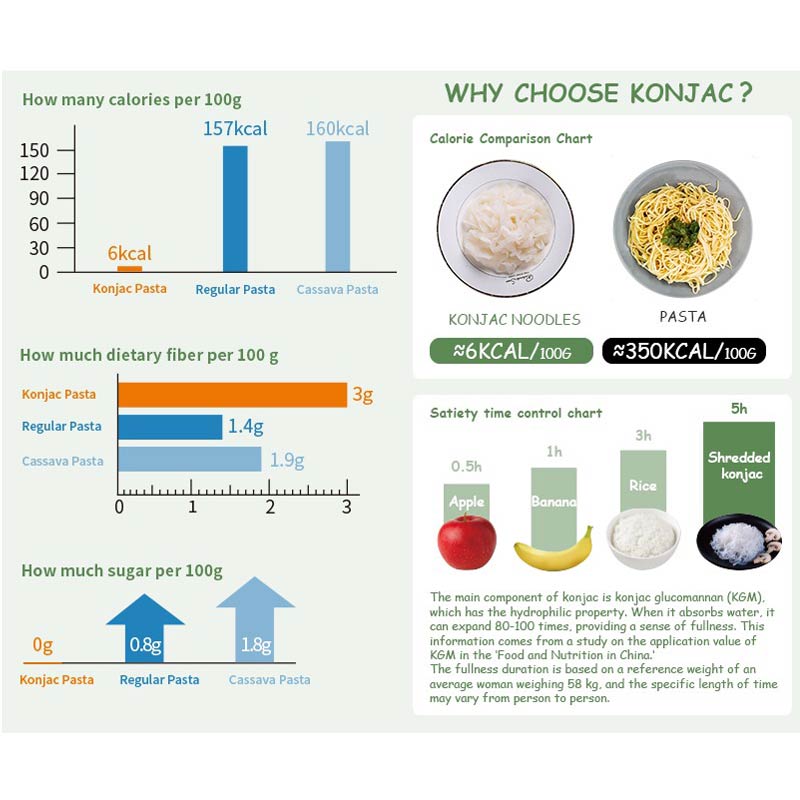
Konjac udon noodles are noodles made from konjac flour as the main ingredient. It is low in calories, carbohydrates, and fiber, making it suitable for people who pursue a healthy diet.
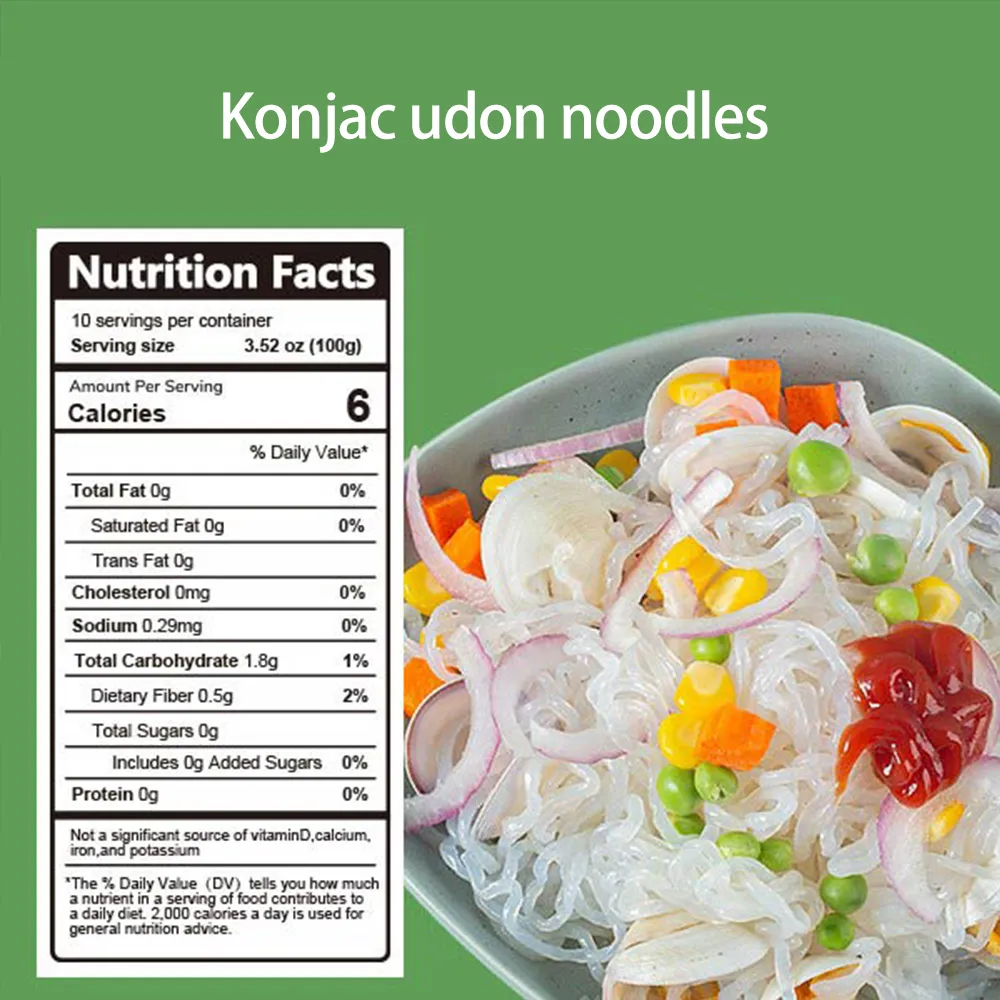
| Serving Size | 100g |
| Energy | 6 kcal |
| Protein | <0.5g |
| Total Fat | <0.5g |
| Saturated fatty acids | <0.1g |
| Trans fatty acids | <0.1g |
| Total Carbohydrate | 3.5g |
| Sugar | <0.5g |
| Dietary Fiber | 3.0g |
| Sodium | <5mg |
Konjac Udon Noodles Descriptions
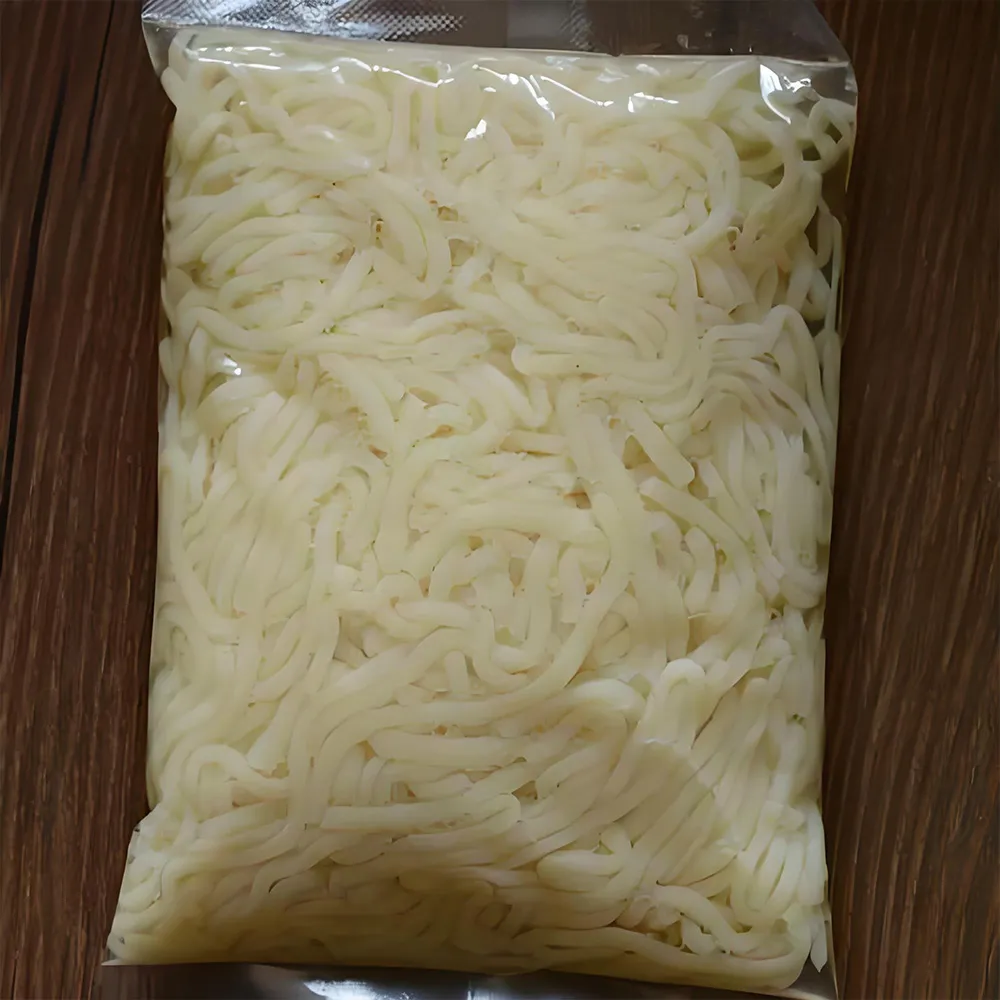
Konjac udon noodles are sometimes called shirataki udon noodles. They are manufactured from powdered konjac, a starchy root vegetable cultivated across Asia.
The primary ingredient in konjac udon is konjac noodles. Konjac udon makes an excellent accompaniment to Asian soups and stews.
Main Features
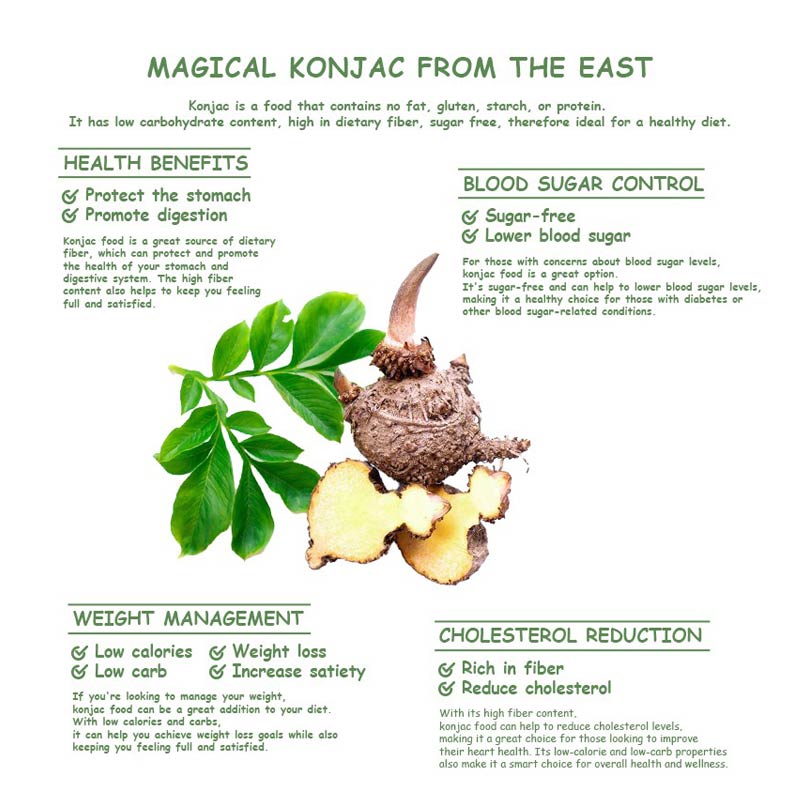
- 1. Low calorie: Each 100g of konjac udon contains only about 10-20 calories.
- 2. Low carbohydrates: Almost no carbohydrates, suitable for low-carb dieters.
- 3. High fiber: Rich in water-soluble fiber glucomannan helps digestion and satiety.
- 4. Gluten-free: Gluten-free, suitable for gluten-intolerant people.
- 5. Low fat: Almost no fat.
Health Benefits
- 1. Weight Management: Low in calories and high in fiber helps manage weight.
- 2. Blood Sugar Control: Low in carbohydrates helps stabilize blood sugar.
- 3. Heart Health: Helps lower cholesterol and improve cardiovascular health.
- 4. Digestive Health: High in fiber promotes gut health.
How to eat
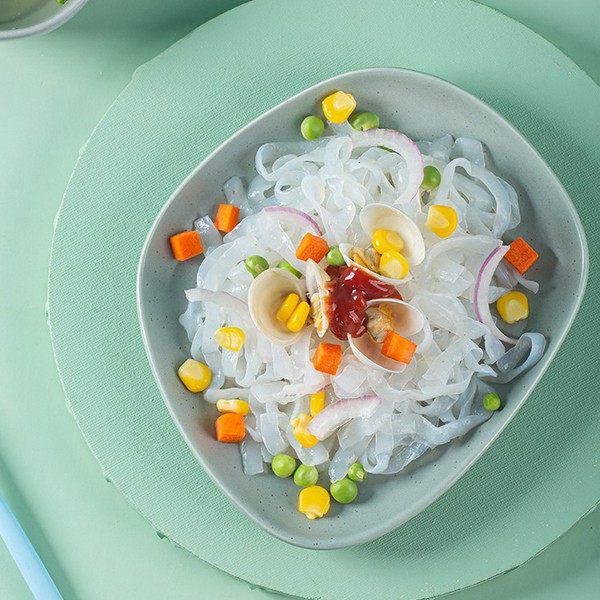
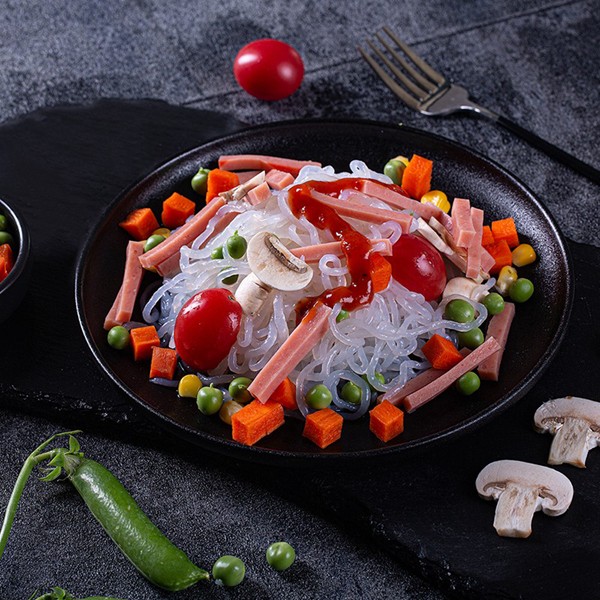
- 1. Soup noodles: You can add vegetables, meat, and seasonings to make soup noodles.
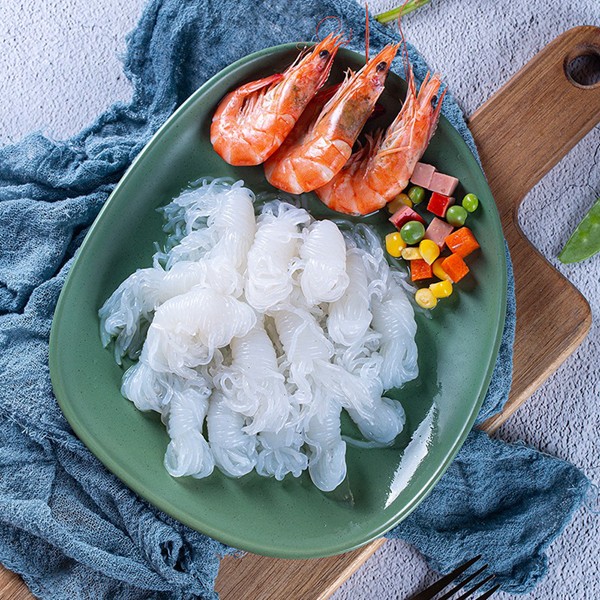
- 2. Fried noodles: Stir-fry with vegetables, meat or seafood.
- 3. Cold salad: After cooking, cool down and add sauce and ingredients to the cold salad.
- 4. Hot pot: As a hot pot ingredient, absorb the soup.
- 1. Taste: Different from traditional noodles, konjac udon noodles are crispy and may require adaptation.
- 2. Seasoning: The taste is light and needs to be matched with sauces or seasonings.
- 3. Digestion: Some people may be sensitive to high-fiber foods, so it is recommended to gradually increase the intake.
- 4. Highly satiating: Since konjac udon have zero protein and fat, it can increase satiety, but care should also be taken to pair it with other nutrient-rich foods, such as vegetables and meat, to ensure a well-balanced diet.
Related Shirataki Noodles
FAQs
1. What are Shirataki Udon Noodles?
2. Are Konjac Udon Noodles healthy?
3. Can Konjac Udon Noodles help support healthy cholesterol levels?
4. Do Konjac Udon Noodles help with constipation?
5. Are Shirataki Udon Noodles suitable for people with diabetes?
Yes. They are naturally very low in carbohydrates and contain virtually no sugar, making them a popular alternative to traditional noodles for people managing carbohydrate intake. Individuals with diabetes should always follow the advice of their healthcare provider.