

The global pasta market in 2026 is no longer defined merely by durum wheat and water. It has evolved into a sophisticated battlefield of sustainability, vertical integration, and functional nutrition. Driven by the explosive growth of Retailer Brands (Private Label Pasta), major manufacturers have transformed from simple suppliers into strategic partners for the world’s largest grocery chains.
To provide a clear comparison for your strategic decision-making, here is a comprehensive matrix of the 10 selected manufacturers. This table highlights their unique specializations, production scales, and ideal retail positioning.
No. | Manufacturer | Core Specialization | Production Scale | Primary Advantage | Best For |
1 | La Doria | Multi-category (Pasta, Sauce, Pulses) | Massive (Part of Windoria Group) | “One-Stop-Shop” for entire Italian shelf. | Global Retail Giants (Walmart, Tesco) |
2 | Pasta Berruto | High-volume Export Specialist | Large (Piedmont based) | Extreme flexibility in global packaging/compliance. | Int’l distributors & large-scale exports. |
3 | Pasta Zara | Industrial Efficiency & Price | Very Large (Post-restructuring) | Price leadership for standard durum wheat lines. | Hard Discount chains (Aldi, Lidl). |
4 | Andriani | Health & Wellness (Gluten-Free) | Global Hub (Italy + New Canada plant) | Innovation leader in legume and functional pasta. | Premium “Free-From” and Health lines. |
5 | Pastificio Pallante | Value-Driven Industrial Production | Large (Southern Italy hub) | High-speed automation and competitive pricing. | Mainstream family-pack private labels. |
6 | Fabianelli | Tuscan Heritage & “Seed to Fork” | Medium-Large (Fully Integrated) | 100% Traceability via B.F. S.p.A. agriculture group. | Premium Regional/Sustainable store brands. |
7 | Liguori | Certified PGI (IGP) Gragnano | Medium (High Premium) | Highest legal quality certification (PGI Gragnano). | Luxury/Top-tier Supermarket ranges. |
8 | Granoro | Apulian Quality & Traceability | Large (Regional focus) | “Dedicato” project (100% Apulian wheat, Glyphosate-free). | High-quality “Single Origin” private labels. |
9 | Pastificio Rey | Flexible Artisanal-Industrial | Medium-Small (Boutique) | Low MOQs and high flexibility for niche projects. | Boutique retailers & specialty gourmet lines. |
10 | Hethstia | Low-Calorie / Functional (Konjac, Pea Protein) | Specialized (Global) | Ultra-low calorie (Keto/Vegan) alternative to grain. | Weight management & specialized diet sectors. |
1. La Doria – A Global Private Label Pasta Manufacturer
La Doria is the leading Italian company in the food sector for the production of private label (retailer brand) products. It is the top producer in Europe for canned pulses and tomato derivatives and a major player in the pasta sauce and fruit juice markets.
History & Ownership
- Founding Date & Location: 1954 in Angri (Campania), the heart of the Italian tomato processing region.
- Founders: Diodato Ferraioli and Anna La Mura. The Ferraioli family remains deeply involved in management, led by CEO Antonio Ferraioli.
- Current Status: Following a 2022 acquisition by investment funds managed by Investindustrial, the company was delisted from the Milan Stock Exchange to focus on rapid international expansion and consolidation.
Core Business & Market Strategy
Private Label Specialist: Approximately 93.3% of its turnover is generated from private label contracts (producing for retailers like Tesco, Carrefour, Lidl, and Walmart).
- Red Line (Tomatoes): A European leader in peeled tomatoes, chopped tomatoes, and purée.
- Pulses & Vegetables: The largest European producer of canned beans, lentils, and ready-made soups.
- Sauces: A leading European manufacturer of pasta sauces and Pesto.
- Pasta: Traditionally a trader of pasta, La Doria has recently transformed into a direct manufacturer (see Strategic Shifts below).
- Fruit Juices: A leading producer for the Italian private label pasta beverage market.
Financial Performance & Global Reach
- Revenue: 2024 consolidated revenue reached approximately €1.277 billion (a 3.9% increase over 2023).
- Exports: Exports account for 83.7% of total sales, with products distributed in over 60 countries.
- Major Markets: The UK is its primary international market (managed via its subsidiary LDH La Doria), followed by Germany, Northern Europe, Australia, and Japan.
Recent Strategic Transformations (2024–2025)
Under its current investment strategy, La Doria has aggressively pivoted toward direct pasta production to control the entire supply chain:
Acquisition of Pastificio Di Martino’s PL Branch (2024): La Doria acquired the private label business unit of the historic Di Martino family. This created La Doria Pasta PL S.r.l., giving the group a production capacity of over 100,000 tons of pasta per year.
Acquisition of Pasta Lensi (January 2025): To dominate the “Better-for-You” segment, La Doria acquired Pasta Lensi, a specialist in legume-based and gluten-free pasta, adding high-margin, health-focused options to their portfolio.
The “Windoria” Merger (September 2025): In a massive industry move, La Doria merged with US-based Winland Foods to create Windoria. This new global entity has a combined turnover of nearly $4 billion, making it one of the largest private-label food suppliers in the world.
2. Pasta Berruto – The Global Export Specialist
Pasta Berruto is widely regarded as the “Export Champion” of the Italian pasta industry. While many Italian companies focus on the domestic market first, Berruto has built its entire business model around serving international retailers and the private-label sector.
History & Heritage
Founding Date & Location: 1881, Carmagnola (Piedmont), near Turin.
Founders: The Berruto family. In 2004, the company underwent a transformative merger with Arrighi, another historic Piedmontese pasta brand, forming the modern Pasta Berruto
Current Leadership: Stefano Berruto (CEO) and Matteo Berruto (Plant Manager) continue to lead the company operations.
Core Business & Global Presence
- The 98% Rule: Pasta Berruto is famous for exporting approximately 98% of its total production.
- Global Footprint: They distribute to over 100 countries. Their primary strength lies in their ability to adapt recipes and packaging to meet the specific legal and cultural requirements of diverse markets (e.g., specific protein levels for the US, Halal certification for the Middle East, or plastic-free packaging for Northern Europe).
- Target Audience: International supermarket chains, large-scale distributors, and discount retailers seeking high-volume, reliable Italian-made pasta.
Financial Performance & Scale
Sales Figures: 2023: Recorded a turnover of approximately €64.4 million.
Production Volume: The Carmagnola plant produces over 60,000 tons of pasta annually across two main categories: Durum wheat semolina pasta and Egg pasta.
Brand Portfolio & Private Label Pasta Services
While they are a powerhouse for third-party brands, they maintain several “house brands” that serve as templates for their private-label capabilities:
- Berruto 1881: The premium, traditional line.
- Arrighi: The flagship brand for international mass markets.
- Italpasta: A value-oriented brand popular in many export markets.
- Innovation: They offer a wide range of specialty pastas, including Organic (Bio), Whole Wheat, Spelt, Tricolor, and Gluten-Free options for private-label clients.
Sustainability & 2026 Outlook
Green Logistics: Located in Piedmont, they leverage efficient rail and port links (via Genoa) to minimize the carbon footprint of their exports.
Packaging Revolution: As of 2025, they have significantly expanded their recyclable paper packaging lines, a key requirement for high-end European private labels (like those in Germany and the UK).
Quality Standards: They hold the highest levels of international certification, including BRC (GSFS) Grade AA+, IFS Food (Higher Level), and ISO 14001.
3. Pasta Zara – The Industrial Volume Leader
Pasta Zara is one of the world’s largest exporters of Italian pasta. After undergoing a significant corporate restructuring over the past few years, the company has emerged as a leaner, highly efficient powerhouse focused on large-scale private label contracts and international mass-market distribution.
History & Heritage
- Founding Date & Location: 1898 in Riese Pio X (Veneto).
- Founders: The Bragagnolo family. For over a century, the company has been synonymous with the Bragagnolo name, evolving from a small artisanal workshop into a massive industrial complex.
- Current Leadership: Led by Furio Bragagnolo, the family continues to guide the company through its modern strategic phase.
Strategic Turnaround (2020–2025)
- The “Muggia” Transition: In a pivotal move to stabilize its finances, Pasta Zara sold its massive Muggia production plant (one of the largest in the world) to the Barilla Group around 2020.
- Focus on Core Assets: This sale allowed Pasta Zara to focus its investments and production on its historic headquarters in Riese Pio X and its plant in Rovato. By 2025, the company will have completed its debt restructuring plan, positioning itself as a debt-free, highly competitive industrial partner.
Core Business & Private Label Pasta Dominance
- High-Volume Specialist: Pasta Zara is designed for scale. It is the preferred partner for global discount chains (like Aldi and Lidl) and major international distributors who require massive, consistent volumes of standard durum wheat pasta.
- Export Strength: Approximately 90% of its production is destined for international markets. They have a presence in over 100 countries, with a particularly strong foothold in Eastern Europe, the Middle East, and Africa.
- Production Capability: Even after the sale of the Muggia plant, Pasta Zara remains one of Italy’s top producers by volume, capable of producing hundreds of thousands of tons of pasta annually.
Financial Performance & Scale (2025/2026)
- Estimated Turnover: Post-restructuring, the company has stabilized its revenues. For 2024/2025, turnover is estimated between €230 million and €250 million.
- Operational Efficiency: The company has invested heavily in Industry 4.0 technologies at its Riese Pio X site, significantly reducing production costs per ton, which allows it to offer some of the most competitive pricing in the private label sector.
Brand Portfolio & Capabilities
- Primary Brands: While the Pasta Zara brand is globally recognized, a significant portion of their business is dedicated to “white-label” production.
- Product Range: They offer an extensive catalog of over 100 different shapes, available in:
- Classic Semolina: Their core high-volume product.
- Whole Wheat & Organic: Growing segments for their private label partners.
- Vitamin-Enriched: Specialized pasta lines for specific international government tenders and nutritional programs.
Sustainability & 2026 Outlook
- Eco-Packaging: By 2025, Pasta Zara has transitioned a significant portion of its private label output to 100% recyclable plastic and FSC-certified paper packaging.
- Logistics Advantage: Their proximity to major North Italian transport hubs and the Port of Venice makes them highly efficient for European and maritime logistics.
4. Andriani – The Global Leader in Healthy Innovation
Andriani is not just a pasta manufacturer; it is a specialized “Food Innovation” company. While traditional manufacturers focus on durum wheat, Andriani has built a global empire by specializing exclusively in Gluten-Free, Legume-based, and functional pastas. They are the primary partner for retailers worldwide who want to launch premium, health-oriented private label lines.
History & Heritage
Founding Date & Location: 2009 in Gravina in Puglia (Bari).
Founders: The Andriani family (led by brothers Michele and Francesco Andriani).
Current Status: In 2022, the investment holding NUO (a joint venture between the Exor-linked Agnelli family and Hong Kong’s Pao family) acquired a 26% stake to accelerate the company’s global expansion.
Strategic Global Expansion (2025–2026)
- The North American Milestone: In October 2025, Andriani officially inaugurated its first production facility outside of Italy, located in London, Ontario (Canada). This €34 million facility was built specifically to serve the North American private label market, providing “Made in North America” efficiency with “Made in Italy” expertise.
- Global Hub: The headquarters in Gravina remains the largest and most technologically advanced plant in the world dedicated exclusively to allergen-free pasta production.
Core Business & Private Label Pasta Dominance
- “Free-From” Specialist: Their facility is 100% gluten-free and allergen-free. They process raw materials like red lentils, chickpeas, buckwheat, quinoa, brown rice, and corn.
- Private Label Expertise: Andriani produces for the world’s most prestigious retail chains seeking “Healthy” and “Functional” private label lines. They offer complete R&D support to create custom recipes (e.g., high-protein, high-fiber, or low-glycemic index pastas).
- Export Power: Approximately 50% of their turnover comes from exports, with a rapidly growing footprint in the USA, Canada, and Northern Europe.
Financial Performance & Scale (2025/2026)
- Revenue: The company has seen explosive growth. For 2025, consolidated revenues are projected to surpass €130 million, driven by the new Canadian plant and the increasing global demand for plant-based proteins.
- Production: They produce over 40,000 tons of specialty pasta annually, utilizing highly specialized drying technologies required for non-wheat flours.
Brand Portfolio & R&D
- House Brand: Felicia is their flagship consumer brand, which serves as a “living lab” for the innovations they offer to private label clients.
- Innovation Center: They invest heavily in a dedicated R&D center that focuses on “circular economy” flour—using by-products from other food processes to create nutrient-dense pasta.
Sustainability: The B-Corp Edge
- B-Corp Certification: Andriani was one of the first major Italian food companies to achieve B-Corp certification (2020).
- Carbon Neutrality: They are on track to achieve complete carbon neutrality for their production processes by late 2026.
- Sustainable Supply Chain: They manage direct “supply chain agreements” with Italian farmers to ensure the quality and traceability of the legumes and cereals used.
5. Pastificio Pallante – The Industrial Powerhouse of Campania
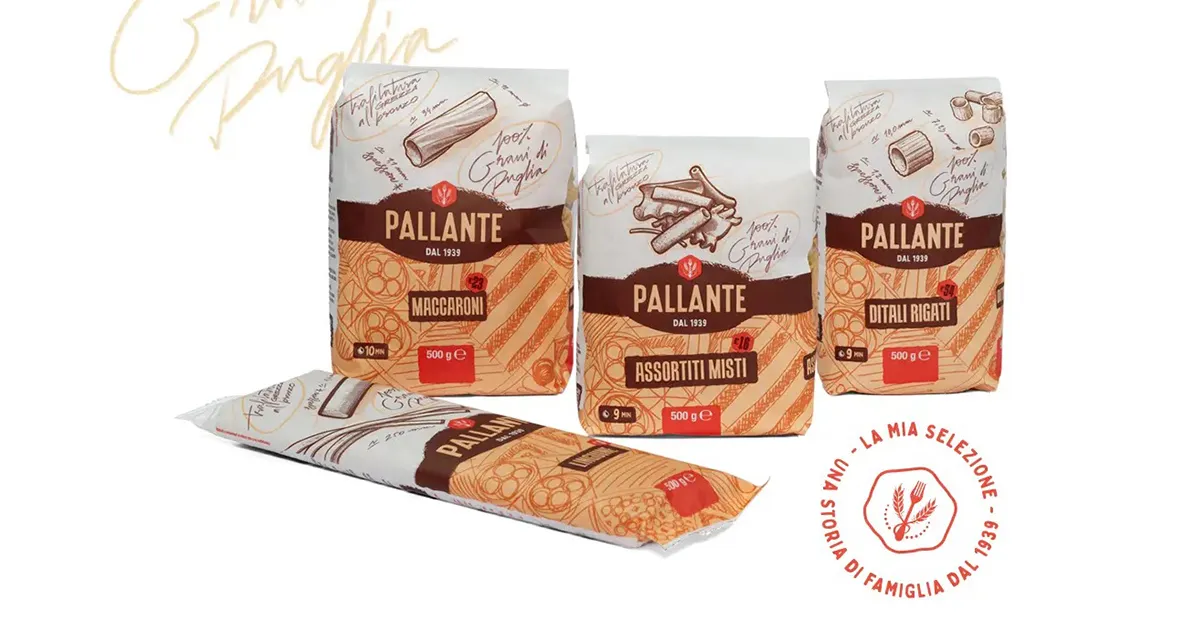
Pastificio Pallante is a premier example of “Industrial Excellence” in the Italian pasta sector. While many Campania-based producers focus on small-scale artisanal methods, Pallante has focused on massive automation and scale, making them a preferred partner for international retailers looking for high-quality, high-volume “Value for Money” private labels.
History & Heritage
- Founding Date & Location: 1949 in Capodrise (Caserta), just north of Naples.
- Founder: Attilio Pallante. The company began as a small family workshop and grew through four generations of the Pallante family.
- Current Leadership: The company is currently managed by the fourth generation, including Attilio Pallante (CEO) and Marcello Pallante, who have overseen the complete modernization of their facilities.
Strategic Positioning & Scale (2025–2026)
- The “Mega-Plant” Advantage: Their production facility in Capodrise covers over 25,000 square meters. It is one of the most automated in Italy, featuring cutting-edge “Industry 4.0” integration.
- Volume Leadership: With a production capacity of approximately 350 tons per day, they are built to handle the massive demands of global supermarket chains and international distribution hubs.
- Focus on Value: Unlike premium PGI brands, Pallante focuses on the “Mainstream/Value” segment, providing a high-standard Italian product at a price point that is highly competitive for large-scale private label contracts.
Core Business & Private Label Pasta Dominance
- The “Invisible” Giant: While their house brand Pasta Reggia is a best-seller in many markets, over 50-60% of their business is dedicated to manufacturing for third-party private labels.
- Export Intensity: Approximately 70-75% of their total production is exported. They have a particularly dominant presence in Africa, North America, and Northern Europe.
- Target Audience: Large international discount chains (Lidl, Aldi), mass-market supermarkets, and large-scale food service providers who require consistent quality across millions of units.
Financial Performance & Scale (2025/2026)
- Revenue: Pastificio Pallante has seen steady growth due to global food inflation and the rising demand for affordable Italian staples. For 2025, their turnover is estimated to be between €130 million and €150 million.
- Investment: In 2024/2025, the company invested over €10 million in new high-speed packaging lines and a fully automated warehouse to further reduce lead times for its international private-label clients.
Brand Portfolio & Capabilities
- Flagship Brand: Pasta Reggia (widely recognized for its red and gold packaging).
- Private Label Versatility: They specialize in Durum Wheat Semolina pasta in over 80 different shapes.
- Expanded Lines: They offer Whole Wheat (Integrale) and Organic (Bio) options for private label partners looking to move slightly up-market.
- Certifications: They maintain the highest global standards, including BRC (Global Standard for Food Safety), IFS Food, Halal, and Kosher, making them a “plug-and-play” partner for global retail.
Sustainability & 2026 Outlook
- Renewable Energy: The company has installed extensive photovoltaic systems on its plant roofs, aiming to offset a significant portion of its industrial energy consumption by late 2026.
- Efficiency Focus: By minimizing human intervention in the production cycle, they maintain extremely high hygiene standards and lower operational costs, which they pass on to their private label partners.
6. Pastificio Fabianelli – The Tuscan "Seed to Fork" Specialist
Pastificio Fabianelli represents a unique blend of centuries-old Tuscan tradition and modern industrial vertical integration. Following its acquisition by Italy’s largest agricultural landowner, it has become a leader in the “Certified Italian Supply Chain” segment for private label partners.
History & Heritage
- Founding Date & Location: 1860 in Castiglion Fiorentino (Arezzo), Tuscany.
- Founder: The Fabianelli family. The group also includes the Maltagliati brand (founded in 1848), making it one of the oldest pasta-making lineages in Italy.
- Current Leadership: While historically family-run for five generations, the company underwent a major ownership shift in early 2024.
Strategic Ownership & Structural Shift (2024–2026)
- Acquisition: In February 2024, B.F. S.p.A. (Bonifiche Ferraresi), the largest agricultural company in Italy, increased its stake to 94%, fully integrating Fabianelli into its massive agri-food ecosystem.
- Vertical Integration: This merger allows Fabianelli to offer private-label clients a “Seed to Fork” guarantee. They control every step: from the selection of the wheat seeds and cultivation in the fields of Tuscany and Emilia-Romagna to the milling and final pasta production.
Core Business & Private Label Pasta Strategy
- 360° Private Label Pasta Service: Fabianelli is highly specialized in “Tailor-Made” solutions. They provide a dedicated manager for each project, handling everything from custom shape R&D to packaging design and international logistics.
- Export Intensity: The foreign market accounts for over 75% of production. They are widely distributed across 70 countries, with a particularly strong presence in the USA, the Middle East, and Northern Europe.
- Target Audience: Premium and mid-range retail chains seeking “Regionality” and “Sustainability” as key selling points for their store brands.
Financial Performance & Scale (2025/2026)
- Estimated Turnover: In 2021, the company had a turnover of approximately €16 million. Under the management of the B.F. S.p.A. group (which has total revenues exceeding €300 million), Fabianelli has seen rapid scaling. For 2025/2026, its revenue is projected to reach €25–30 million as it becomes the primary pasta arm for the group’s global exports.
- Production Capacity: The Castiglion Fiorentino plant produces over 150 tons per day, balancing industrial speed with traditional bronze-die extrusion and slow drying.
Brand Portfolio & Capabilities & Key Brands:
- Fabianelli: The classic traditional line.
- Maltagliati: A historic brand with strong recognition in the Middle East and Asia.
- Pasta Toscana: The premium flagship, using 100% Tuscan Durum Wheat with full QR-code traceability.
Specialized Lines: They are a major producer of Organic (USDA-NOP certified), Whole Wheat with Omega-3, and high-protein catering pasta for international food service private labels.
Sustainability & Certifications
- Eco-Commitment: Their “Pasta Toscana” line is packaged in 100% recyclable paper, a standard they are now extending to many of their private label contracts.
- Global Standards: They hold a comprehensive list of certifications: BRC (Grade AA), IFS, ISO 9001, Kosher, Halal, and Organic, ensuring they can enter any global market immediately.
7. Pastificio Liguori – The Gold Standard of PGI Gragnano
Pastificio Liguori is one of the oldest and most prestigious pasta factories in Italy. While other manufacturers compete on volume or price, Liguori competes on heritage, certification, and sustainability. They are a primary partner for high-end retailers who want to offer a “Signature” or “Gourmet” private label pasta line with the highest legal quality status in the world: PGI Gragnano.
History & Heritage
- Founding Date & Location: 1795 in Gragnano (Naples), the world-renowned “City of Pasta.”
- Founder: Gaetano Liguori. The company holds one of the first municipal licenses to produce “macaroni.”
- Current Status: After centuries of family ownership, the brand was revitalized by the Casillo family (leaders in the Italian wheat industry). This partnership combines Liguori’s artisanal “know-how” with Casillo’s unrivaled access to the highest-quality 100% Italian durum wheat.
The PGI (IGP) Gragnano Distinction
- World-First Certification: Liguori was the first pasta to obtain the Protected Geographical Indication (PGI/IGP) certification at the European level.
- Strict Quality Laws: To carry the Liguori name or their private-label equivalent, the pasta must be produced in the Gragnano district using pure spring water from the Lattari Mountains and traditional Bronze Dies (which create a rough surface to grip sauce).
- Target Audience: Premium global retailers (e.g., Marks & Spencer, Whole Foods, high-end Asian departments) seeking an “Ultra-Premium” store brand.
Strategic Sustainability (2025–2026)
Liguori has positioned itself as the most environmentally advanced pasta factory in Italy:
- The 10MW Photovoltaic Park: In a landmark move, Liguori completed a €10 million investment in 2024 (supported by Banco BPM) to build a massive solar park.
- Energy Self-Sufficiency: As of late 2025, Liguori is the first major pasta company to be 100% energy self-sufficient, feeding clean energy back into the national grid and saving nearly 6,000 tons of $CO_2$ annually.
- Packaging: They were pioneers in moving to 100% recyclable paper packaging (FSC certified) for their PGI lines, a key requirement for ESG-focused private label contracts in Northern Europe.
Industrial Capabilities & Innovation
- The “Liguori Method”: Unlike mass-market brands that dry pasta at high heat for 2–4 hours, Liguori uses a Slow Drying Method (low temperatures for up to 18 hours). This preserves the protein structure and wheat aroma.
- Blockchain Traceability: They were among the first to integrate blockchain technology into their supply chain. Every bag can be traced back to the specific certified wheat field in Southern Italy, ensuring 100% transparency for the consumer.
- Global Presence: They currently export to over 70 countries, with a major focus on strengthening their presence in North America and Asia through premium retail partnerships.
8. Granoro – The Master of Apulian Traceability
Granoro is widely recognized as the guardian of Pugliese pasta-making tradition. Located in the “breadbasket of Italy,” the company has successfully transitioned from a local family business to a global player by focusing on 100% regional supply chains and high-quality industrial standards.
History & Heritage
- Founding Date & Location: 1967 in Corato (Bari), Puglia.
- Founder: Attilio Mastromauro, a visionary industrialist from a historic family of pasta makers.
- Current Leadership: Today, the company is managed by his daughters, Marina Mastromauro (CEO) and Daniela Mastromauro. They have maintained their father’s philosophy of “the search for the best” while modernizing the brand’s international profile.
The "Dedicato" Project (Supply Chain Leadership)
- 100% Puglia Wheat: Granoro’s most significant competitive advantage is the “Dedicato” line. Launched in 2012, it was the first major supply chain agreement in Puglia to guarantee 100% regional origin.
- Traceability & Purity: For private label partners, Granoro offers a glyphosate-free guarantee and full ISO 22005 traceability. This allows retailers to market a product that is traceable from the specific fields of Puglia to the final consumer’s table.
- 2025 Milestone: In June 2025, the company hosted “Gran Giorno 2025,” a major industry event celebrating the growth of the Dedicato project, which now involves hundreds of local farms and specialized mills.
Core Business & Private Label Pasta Strategy
- Premium Private Label Pasta Partner: While Granoro has a strong consumer brand, they are a preferred partner for international retailers (especially in the USA, Canada, and Asia) looking for premium “Single-Origin” Italian pasta.
- Product Versatility: They offer over 150 different shapes, ranging from standard semolina to organic, whole wheat, and specialty wellness lines (like their “Cuore Mio” pasta with barley flour).
- High-Quality Industrial Process: They use low-temperature drying (never exceeding 80°C) and bronze extrusion, ensuring the pasta maintains its organoleptic properties and a rough surface that holds sauces better.
Financial Performance & Scale (2025/2026)
- Revenue Growth: Granoro has seen steady upward momentum. For the 2025 fiscal year, turnover is estimated to be between €95 million and €105 million.
- Export Strength: Exports account for roughly 50% of total revenue, with a distribution network reaching over 80 countries. They have recently seen significant growth in Southeast Asia and the Middle East.
Brand Value & Sustainability
- Sustainability & ESG: Granoro has invested heavily in reducing its environmental footprint. Their “Dedicato” project naturally lowers CO2 emissions by utilizing a short supply chain (minimizing wheat transport distances).
- Certifications: They are highly certified for international trade, including BRC (Grade AA), IFS (Higher Level), Organic (EU & USDA), Halal, and Kosher.
- Social Responsibility: The company is deeply integrated into the Apulian social fabric, supporting local agriculture and employment, which adds a strong “ethical” narrative to their private label offerings.
9. Pastificio Rey – The Specialist in Flexible Premium Production
Pastificio Rey stands out in the Italian landscape as a “boutique industrialist.” While giants like La Doria or Pasta Zara focus on massive scale, Rey has carved out a niche as the ideal partner for retailers who require premium quality, flexible production runs, and a strong artisanal identity.
History & Heritage
- Founding Date & Location: 1851 in San Damiano d’Asti (Piedmont).
- Founder: The Rey family. It is one of the oldest pasta factories in the Piedmont region, having evolved from a local village bakery into an international exporter while remaining family-owned.
- Current Leadership: The company is currently managed by the fifth generation of the family, maintaining a direct, hands-on approach to quality control.
Market Position: The "Artisan-Industrial" Hybrid
- The Boutique Advantage: Pastificio Rey is uniquely positioned to handle smaller minimum order quantities (MOQs) than the massive Southern Italian factories. This makes them the primary choice for “niche” private labels, gourmet supermarket lines, and specialty health stores.
- Piedmontese Excellence: They utilize pure spring water from the Piedmontese Alps and local semolina, positioning their product as a “North-Western Italian” specialty, which contrasts with the more common Southern Italian varieties.
Core Business & Private Label Pasta Strategy
- Private Label Versatility: Approximately 75-80% of their production is dedicated to international export and private label. They are highly responsive to market trends, such as rapid shifts toward sustainable packaging or specific wheat requirements.
- Target Audience: High-end retailers and importers in Europe, North America, and East Asia (particularly Japan and South Korea) who prioritize “Made in Italy” heritage and artisanal textures over the lowest possible price.
- Specialized Extrusion: They focus heavily on Bronze Die (Trafila al Bronzo) extrusion, which creates a porous, rough surface on the pasta, and Slow Drying cycles that preserve the nutritional value of the grain.
Financial Performance & Scale (2025/2026)
- Estimated Turnover: For the 2025 fiscal year, turnover is estimated between €15 million and €18 million. While smaller in revenue than others on this list, their profitability per ton is higher due to their focus on the premium segment.
- Production Capacity: Their plant in San Damiano d’Asti produces roughly 100 tons per day, balancing high-tech automation with traditional recipes.
Brand Portfolio & Capabilities
- Core Product Range: Traditional Semolina: Available in over 60 shapes.
- Egg Pasta: A specialty of the Piedmont region, where they produce high-quality tagliatelle and pappardelle.
- Wellness Lines: They have recently expanded their private-label offerings to include Organic, Whole Wheat, and Spelt (Farro) pasta.
- Logistics: Their location in North-West Italy (near Turin and Genoa) provides a strategic advantage for logistics into France, Switzerland, Germany, and maritime shipping to the Americas.
Sustainability & 2026 Outlook
- Eco-Innovation: By 2025, Pastificio Rey has converted nearly 100% of its premium private label lines to plastic-free, compostable, or FSC-certified paper packaging, staying ahead of EU environmental regulations.
- Solar Integration: The company has implemented a self-generation energy plan using photovoltaic panels to power their drying rooms, reducing the carbon footprint of every kilo produced.
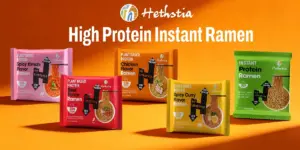
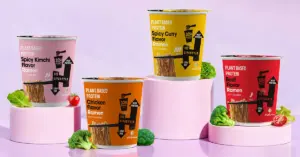
10. Hethstia – The Leader in Functional & Low-Calorie Innovation
Hethstia is a disruptor in the international market, specializing in Konjac-based pasta, rice, and high-protein pasta. While it maintains a strong presence in the European market through its distribution hubs and partnerships, it focuses on the rapidly growing “Dietary & Health” private label segment, catering to Keto, Vegan, and weight-management consumers.
History & Heritage & Global Presence
- Founding Date & Location: 2012 in Sichuan.
- Founder: Liu Lei. He began studying in Japan in 2008, where he learned Japanese konjac production techniques, and returned to his home country in 2012.
- Current Leadership: The company is currently managed by second-generation family members and adheres to a hands-on approach to quality control.
- Brand Concept: The name “Hethstia” is derived from the Greek goddess of the hearth (Hestia) and “Health,” signaling its mission to combine home-cooked comfort with nutritional wellness.
- Global Hubs: While the brand has deep roots in Asian agricultural excellence (where Konjac is natively grown), it operates extensive European distribution and private-label services to serve Western retailers.
- Target Audience: Modern retailers (e.g., Holland & Barrett, health-food chains, and the “Healthy Living” aisles of major supermarkets) seeking alternatives to traditional carbohydrate-heavy pasta.
Core Business & Private Label Pasta Strategy
- The “Zero” Specialist: Hethstia’s primary value proposition for private labels is its “Zero” range: Zero Fat, Zero Sugar, Gluten-Free, and extremely Low-Calorie (often as low as 9-20 kcal per 100g).
- R&D Innovation: They are pioneers in removing the traditional “fishy” odor associated with Konjac products. For private label partners, they offer Odorless Konjac and “Ready-to-Eat” (pre-packaged with sauces) solutions.
- Ingredient Blending: Unlike basic Konjac producers, Hethstia offers advanced blends, such as Konjac mixed with Oat Fiber, which gives the pasta a texture much closer to traditional Italian al dente pasta.
Financial Performance & Scale (2025/2026)
- Market Growth: Driven by the global explosion of the Keto and Gluten-Free markets, Hethstia has seen a surge in volume. For 2025, they have expanded their production capacity to handle the increasing demand for “Store Brand” healthy alternatives in North America and Europe.
- Export Focus: 100% of their private-label production is focused on international health-conscious markets, particularly the UK, Germany, the USA, and Australia.
Product Portfolio & Capabilities
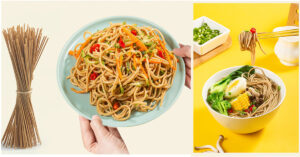
- Konjac Pasta Shapes: Fettuccine, Penne, Lasagna, and Spaghetti.
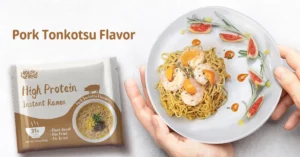
- High-protein pasta: Plant-based, lower in carbohydrates, and contains 50% more protein than regular pasta.
- Konjac Rice: A high-growth category for private label meal-prep companies.
- Innovative Solutions: They offer “Dry Konjac” (a breakthrough that makes shipping lighter and cheaper) and shelf-stable “Wet Konjac” in pouches.
- Certifications: Fully compliant with global standards, including IFS, BRC, USDA Organic, EU Organic, Vegan Society, Halal, and Kosher.
Sustainability & 2026 Outlook
- Clean Label: By 2026, Hethstia has committed to a “Clean Label” initiative for all private-label clients, ensuring zero artificial preservatives or additives in their Konjac formulations.
- Packaging: They have introduced BPA-free and recyclable pouch technology, catering to the eco-conscious demographic that typically purchases functional health foods.

Summary: The Future of the Partnership
As we move through 2026, the selection of a pasta manufacturing partner is no longer just about the product—it is about the story and the supply chain.
If your goal is Dominance, partners like La Doria or Pasta Zara provide the necessary industrial muscle.
If your goal is Differentiation, Liguori and Granoro offer the heritage and certifications to justify higher margins.
If your goal is Innovation, Andriani and Hethstia provide the technology to capture the rapidly expanding “Better-for-You” market.
The Italian pasta industry has successfully navigated the challenges of the mid-2020s by diversifying into health, embracing green energy, and securing its agricultural roots. Whether through a 100% Italian wheat guarantee or a gluten-free innovation in Canada, these ten leaders ensure that pasta remains the world’s most versatile and resilient food category.