For anyone managing diabetes, adhering to a strict ketogenic regimen, or pursuing metabolic health, traditional polished white rice poses an undeniable dietary challenge. With a glycemic index near 73 and roughly 45 grams of dense, rapidly digestible carbohydrates per cooked cup, standard rice triggers swift blood sugar spikes, followed by steep insulin surges and energy crashes.
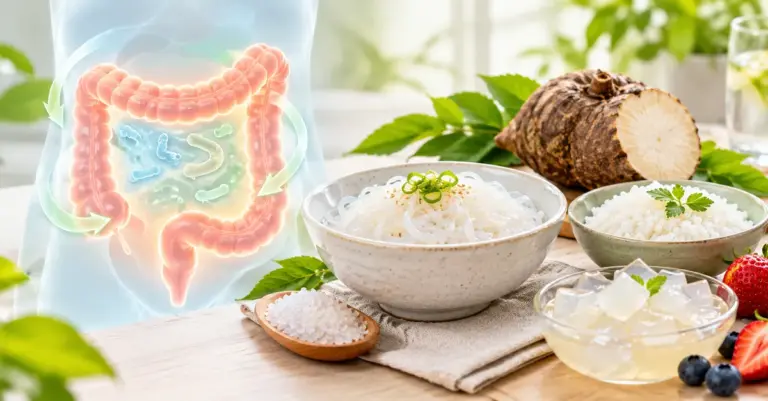
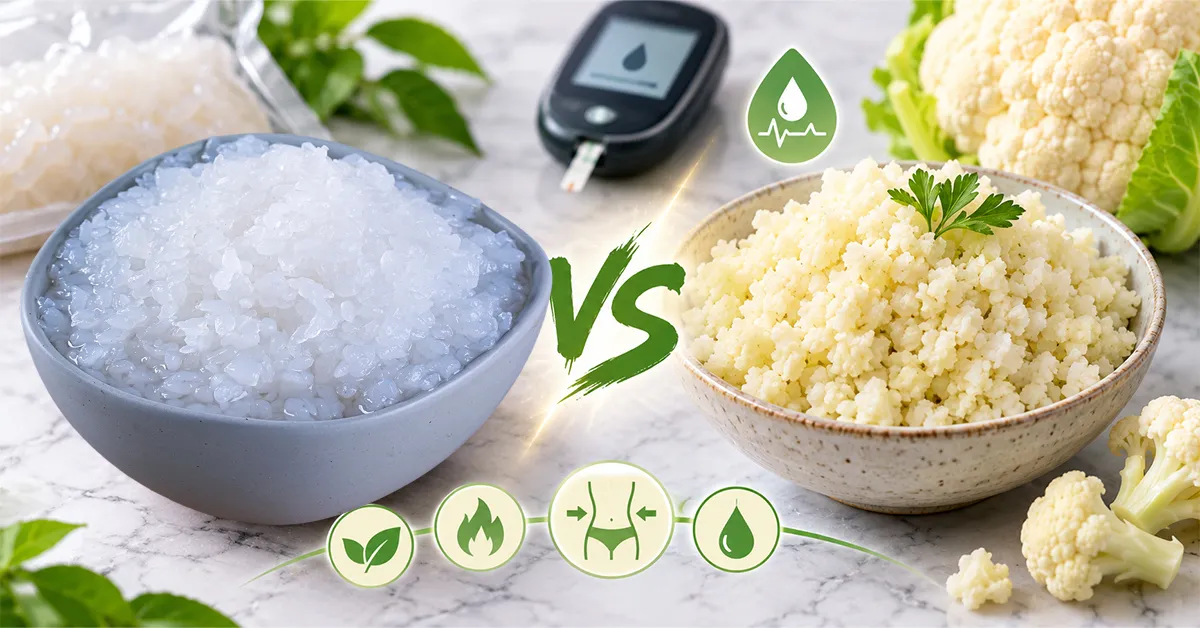
The surge in low-carbohydrate lifestyle adoption has elevated two prime grain replacements to global kitchen dominance: shirataki rice (also widely known as konjac rice or miracle rice) and cauliflower rice.
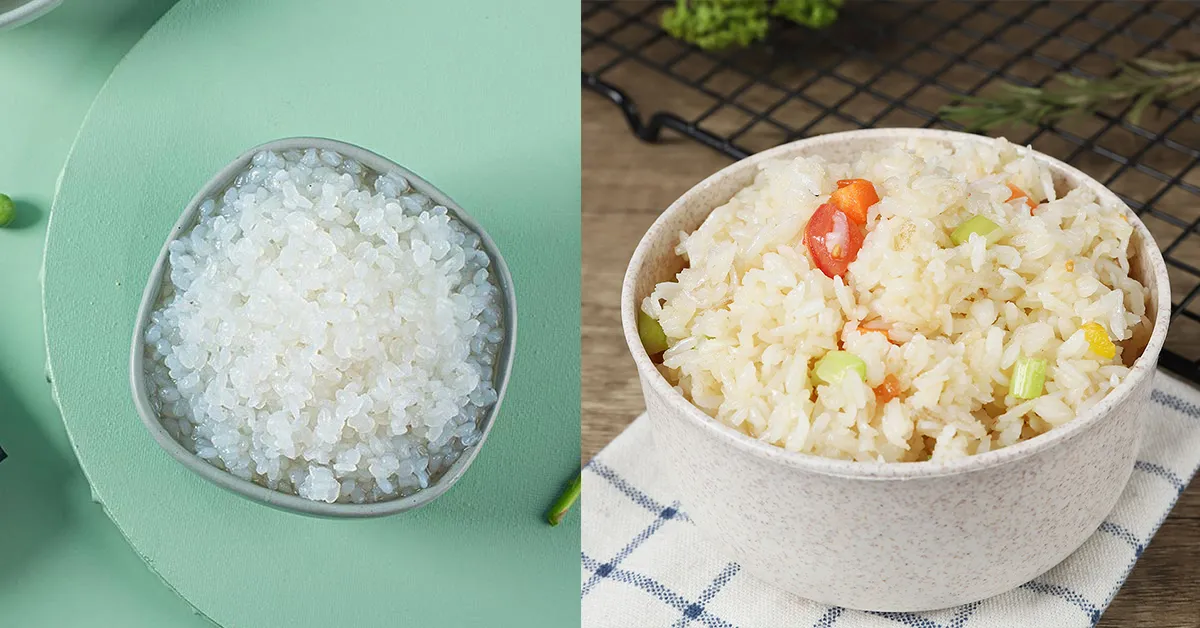
Both options offer a level of satiety, texture, and versatility similar to rice, without the high carbohydrate content found in rice. However, despite their visual resemblance, they differ fundamentally in terms of their food matrix, cooking characteristics, shelf life, and metabolic effects.
If your goal is to find the undisputed best keto rice substitute and lowest-calorie rice alternative, this comprehensive evaluation breaks down the nutritional science, cooking performance, and everyday practicality of shirataki rice versus cauliflower rice.
1. Shirataki Rice vs Cauliflower Rice: Comprehensive Breakdown
Before examining the cellular mechanics and digestive pathways of each alternative, review how they compare across vital nutritional, culinary, and storage metrics per standard 100-gram serving:
| Nutritional & Physical Metric (Per 100g) | Shirataki / Konjac Rice (Wet Pouch) | Dried Konjac Rice (Rehydrated) | Riced Cauliflower (Raw/Fresh) | Riced Cauliflower (Frozen/Cooked) |
| Total Calories (kcal) | 5 – 10 kcal | 25 – 35 kcal | 25 kcal | 22 – 28 kcal |
| Total Carbohydrates | 2.5 – 3.5 g | 6.0 – 8.0 g | 5.0 g | 4.5 – 5.5 g |
| Dietary Fiber | 2.5 – 3.5 g (100% Soluble) | 5.0 – 7.0 g (Soluble) | 2.0 g (Predominantly Insoluble) | 1.8 – 2.2 g |
| Net Carbohydrates | < 0.5 g (Virtually Zero) | ~ 1.0 g | 3.0 g | 2.7 – 3.3 g |
| Protein Content | 0.0 g | 0.2 g | 1.9 g | 1.5 g |
| Fat Content | 0.0 g | 0.0 g | 0.3 g | 0.3 g |
| Glycemic Index (GI) | 0 | < 5 | ~ 15 | ~ 15 |
| Cooked Texture Profile | Al dente, firm, springy (chewy) | Tender, grain-like, uniform bite | Tender-crisp if fast; soft/crumbly | Soft, easily mushy, watery |
| Moisture Absorption Capacity | High micro-pore capillary suction | Superior internal liquid uptake | Zero (discharges native water) | Negative (releases cellular water) |
| Typical Aroma Profile | Neutral (after rinse/dry-parch) | Completely neutral | Distinct brassica/sulfuric note | Strong cooked cabbage/sulfur |
| Pantry Shelf Life | 12 – 24 months (ambient pouch) | 24 months (airtight ambient dry) | 3 – 5 days (refrigerated raw) | 8 – 12 months (freezer) |
| Primary Fiber Compound | Glucomannan polysaccharide | Glucomannan / resistant starch | Cellulose, hemicellulose, pectin | Cellulose, pectin |
2. Nutritional Comparison: Shirataki Rice Carbs vs Cauliflower Rice
Evaluating the nutritional landscape of these two staples reveals that their macronutrient distributions serve distinct physiological functions.
The True Meaning of Shirataki Rice Carbs
Shirataki rice is manufactured from the corm of the Amorphophallus konjac plant, a perennial native to subtropical and tropical East Asia. The raw corm consists almost entirely of glucomannan, a water-soluble, highly branched polysaccharide composed of β-1,4-linked D-mannose and D-glucose units.
Because the human gastrointestinal tract lacks the endogenous β-mannanase enzymes necessary to cleave these specific polysaccharide bonds, glucomannan passes through the mouth, stomach, and small intestine completely unhydrolyzed.
When you read a shirataki rice nutrition label stating 3 grams of total carbohydrates per serving, that figure represents 100% dietary fiber. Consequently:
Net Carbohydrates = Total Carbohydrates – Dietary Fiber ≈ 0 grams
This mathematical neutrality is what secures shirataki rice’s status as the lowest-calorie rice alternative available, delivering as few as 5 to 10 kilocalories per 100 grams.
The Hidden Carbs in Cauliflower Rice
Cauliflower is a cruciferous vegetable (Brassica oleracea var. botrytis). While it serves as a nutritious, low-starch vegetable, it remains intact plant tissue containing free simple sugars, including glucose, fructose, and sucrose.
A standard 100-gram portion of riced cauliflower contains approximately 5 grams of total carbohydrates, balanced by only 2 grams of dietary fiber. This leaves 3 grams of net carbohydrates per 100 grams:
- A realistic dinner serving of rice is roughly 200 to 250 grams (cooked volume).
- Consuming a full bowl of cauliflower rice introduces 6 to 8 grams of net carbohydrates into your meal.
- For an individual on a strict ketogenic therapy or phase-one keto diet capped at 20 grams of net carbohydrates daily, that single side dish consumes 35% to 40% of their total daily carbohydrate allowance.
Macronutrient Comparison per 200g Prepared Serving:
Metric | Shirataki Rice(Wet Pouch) | Cauliflower Rice(Fresh) | Key Difference & Advantage |
Calories | 15 kcal | 50 kcal | Shirataki has 70% fewer calories (virtually negligible) |
Net Carbs | 0 g | 6 g | Shirataki delivers true zero net carbs—no keto break, no glucose spike |
Dietary Fiber | 6 g (100% Soluble) | 4 g (Mainly Insoluble) | Shirataki packs 50% more fiber for sustained satiety and prebiotic gut fuel |
Glycemic Index (GI) | 0 | ~ 15 | Shirataki places zero load on insulin or blood sugar |
Keto Suitability | ⭐️⭐️⭐️⭐️⭐️ (Ultimate) | ⭐️⭐️⭐️ (Portion-controlled) | 200g of cauliflower rice burns through 30% of a strict 20g daily carb limit |
3. Blood Sugar, Insulin Dynamics, and Diabetes Management
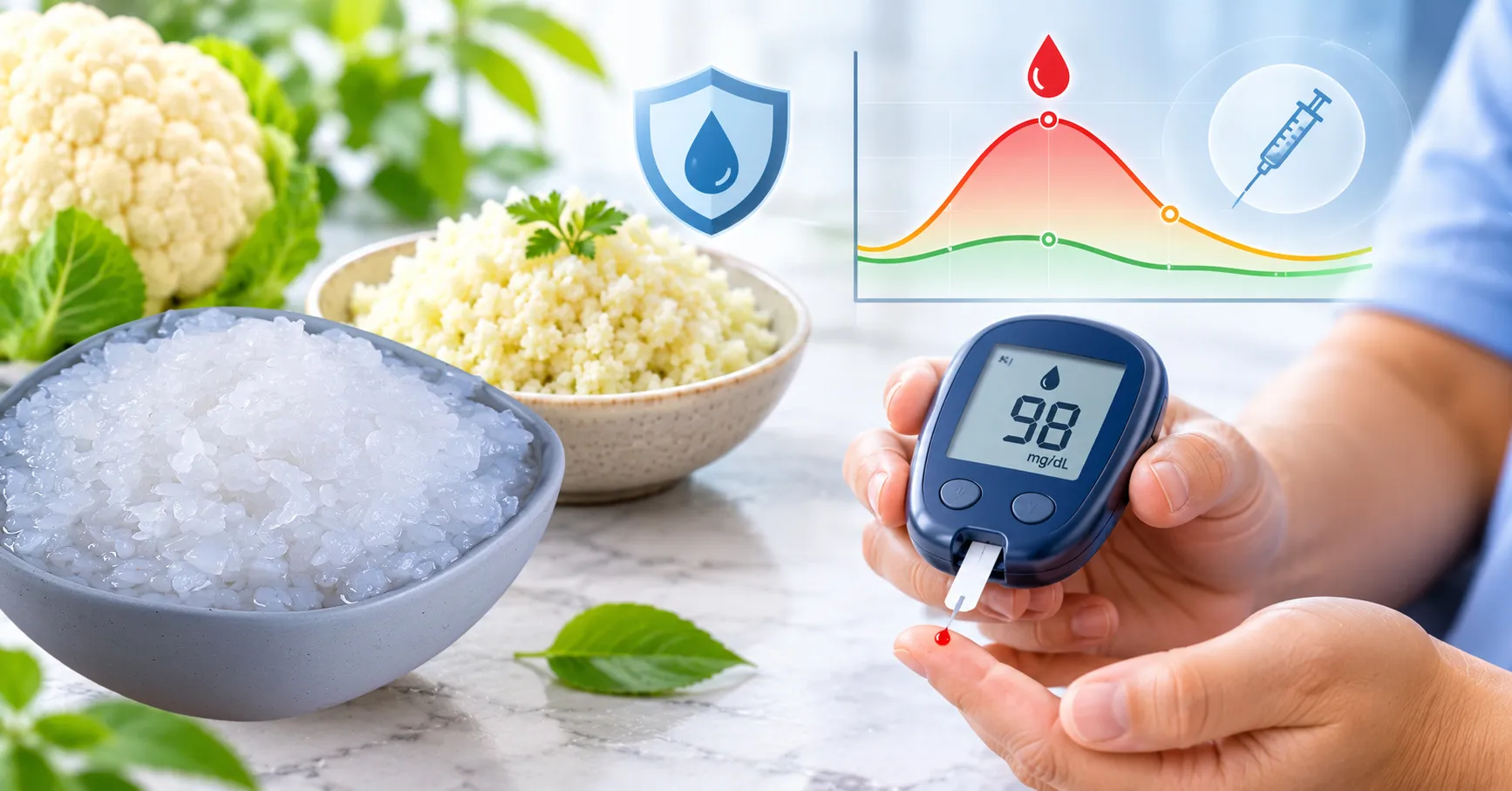
Is shirataki rice good for diabetics? Yes. Beyond functioning as an inert filler, glucomannan actively improves glucose homeostasis through rheological mechanisms in the gut.
Viscosity and Gastric Emptying Rates
Upon hydration, glucomannan exhibits the highest water-binding capacity and viscosity among all known dietary hydrocolloids, expanding up to 50 times its dry volume in liquid. Inside the stomach and upper duodenum:
- The hydrated glucomannan forms a high-viscosity gelatinous matrix that encapsulates co-ingested meals.
- This gel matrix physically delays gastric emptying into the small intestine.
- It creates an unstirred water layer along the intestinal mucosa, reducing the rate at which digestive enzymes (such as alpha-amylase and brush-border disaccharidases) can access and hydrolyze other dietary carbohydrates.
- Glucose diffusion into mesenteric capillaries slows from an acute peak to a gradual, flattened curve.
Insulin Sensitivity and Short-Chain Fatty Acids
Once glucomannan reaches the cecum and ascending colon intact, the anaerobic microbiome readily ferments it into short-chain fatty acids (SCFAs), notably acetate, propionate, and butyrate.
Propionate modulates hepatic gluconeogenesis, while butyrate acts as the primary fuel source for colonocytes, reinforcing mucosal barrier integrity and reducing circulating systemic endotoxins (LPS). This mechanism directly curbs subclinical chronic inflammation, a primary driver of peripheral insulin resistance in Type 2 diabetes.
Cauliflower rice also promotes digestive health through its insoluble cellulose and glucosinolate compounds. However, it lacks the gel-forming viscosity required to slow the absorption of co-ingested meal carbohydrates. For individuals aiming to eradicate postprandial glucose excursions, konjac-derived grains deliver superior metabolic stability.
4.Texture and Culinary Mechanics: Chewy vs Mushy
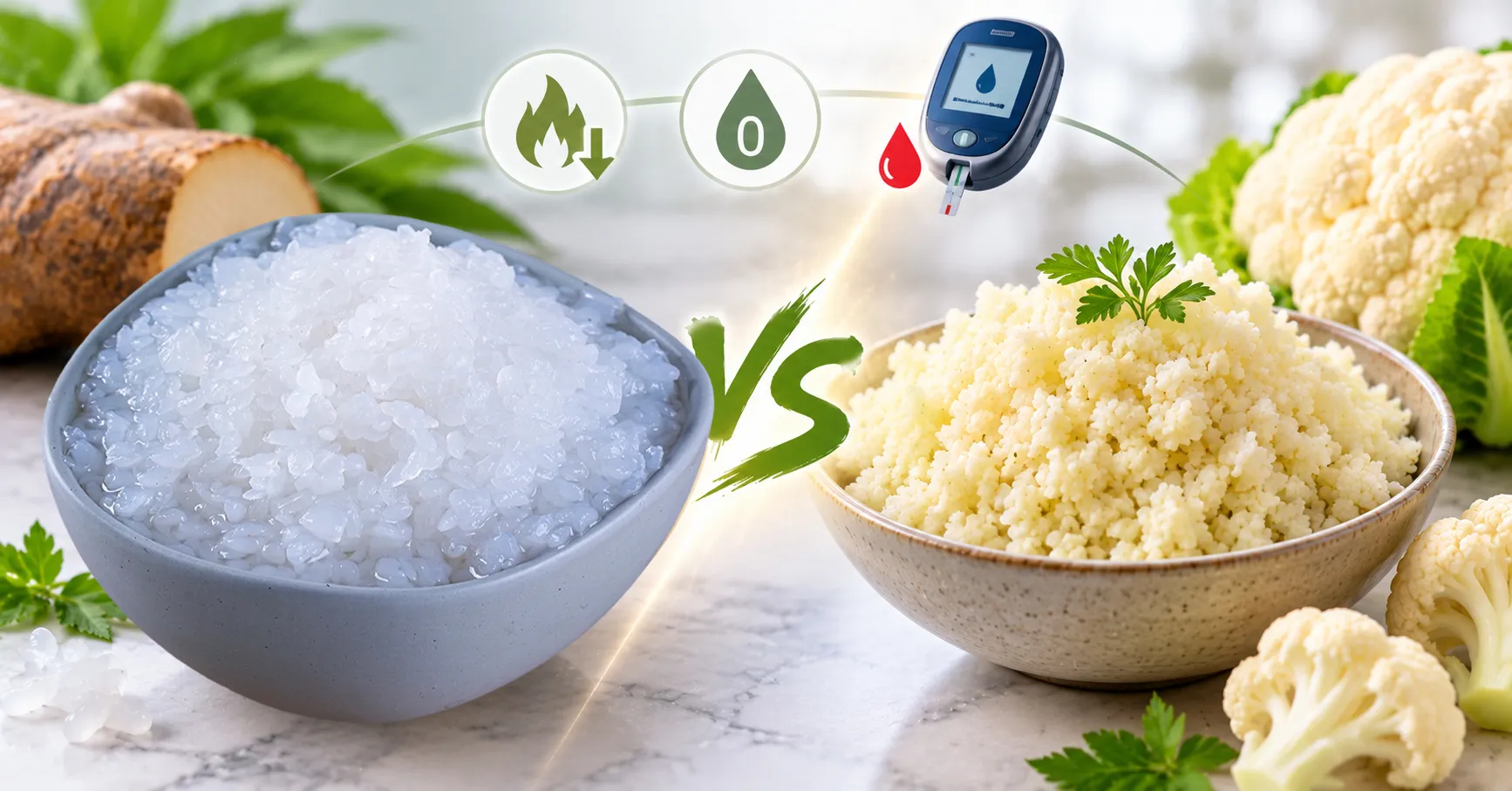
The most heated debate surrounding low-carb rice substitutes focuses on mouthfeel, sauce delivery, and cooking resilience.
Mechanical Shear & Heat Reaction
Shirataki Rice:
Heat-Irreversible Gel Network -> Retains Shape, Al Dente Spring, Zero Leaching
Cauliflower Rice:
Thermal Cell Wall Breakdown -> Pectin Hydrolysis, Cellular Water Purge, Mushy Puree
Why Cauliflower Rice Becomes Mushy
Raw cauliflower contains over 92% intracellular water held within pectin-rich vegetable cell walls. When riced cauliflower is exposed to prolonged heat in a skillet, wok, or microwave, these structures break down rapidly:
- Thermal processing hydrolyzes the protopectin holding plant cells together, causing the cells to rupture.
- Vacuolar water escapes into the pan, boiling the rice in its own internal moisture rather than frying or searing it.
- Unless cooked within a precise 3-to-4-minute window over high heat, cauliflower rice collapses into a damp, sulfurous, mashed consistency incapable of standing up to rich curries or wok-tossed stir-fries.
The Hydrogel Resilience of Shirataki Rice
Shirataki rice does not rely on plant cell walls for structure. During production, konjac flour is dissolved in water and treated with an alkaline coagulant (typically food-grade calcium hydroxide).
This exposure deacetylates glucomannan polymer chains, allowing them to form dense, interconnected crystalline junction zones via hydrophobic interactions and hydrogen bonding. The resulting structure is a thermally irreversible hydrogel network.
You can boil, sauté, bake, or wok-fry shirataki rice for an extended period, and its structural granules will not dissolve or turn soft. Instead, it provides a persistent, pleasant, slightly springy, al dente chew that closely mimics short-grain Asian rice or Italian Arborio rice.
The Physics of Sauce Absorption: The Dry-Parching Technique
A common complaint among first-time shirataki users is that “sauces slide right off the wet grains.” This occurs because the micro-pores of standard wet konjac rice are already saturated with packing water straight from the pouch.
To turn shirataki into an exceptional sauce vehicle, use dry-patching:
Step 1: Thorough Rinse -> Flush cold water through a mesh sieve (60 seconds)
Step 2: Flash Blanch -> Boil with 1 tsp lemon juice or vinegar (120 seconds)
Step 3: Dry-Parch Pan -> Toast in a hot, oil-free skillet until squeaking stops
Step 4: Flavor Infusion -> Pour sauce/curry directly onto the parched, thirsty grains
When heated in an ungreased pan, surface moisture rapidly flashes off as steam. As the exterior dehydrates, capillary pressure within the gel network reverses. The moment you introduce a pan sauce, bone broth, or curry, the thirsty shirataki granules draw the seasoned liquid straight into their micro-cavities.
5. Wet Shirataki Rice vs Dry Konjac Rice: What Should You Buy?
Manufacturers formulate konjac-based rice into two distinct retail and commercial formats: traditional wet pouches and dehydrated (dry) grains.
Wet Pack vs. Dry Extruded Formats:
Wet Pouch Form:
[ Water Weight: ~95% ] [ Ambient Pouch ] -> Zero-Prep Cooking, Lowest Calorie; Requires Sieve Drain & Surface Dry
Dry Extruded Form:
[ Dry Pearl Grain ] [ Box / Dry Sack ] -> Authentic Grain Hydration, Zero Water Freight; 10-Minute Simmer, Starch/Fiber Balanced
Wet shirataki is suspended in a mild alkaline solution to preserve hydration, structure, and microbial shelf-stability throughout transport:
- Nutritional Reality:Zero fat, negligible calories (5 to 10 kcal/100g), zero net carbohydrates.
- Prep Workflow:Requires draining, running under fresh cold water for 60 seconds to rinse away the ambient packing liquid, and dry-parching in a skillet.
- Best Use:Strict keto routines, extreme intermittent fasting, zero-carb diabetic evening meals, and low-calorie diet regimens.
Dry Konjac Rice (Extruded & Dehydrated)
Dry konjac rice is manufactured by blending purified glucomannan powder with functional resistant starches (such as tapioca or pea starch), processing the mixture through an extrusion die to shape miniature rice grains, and drying them down to less than 10% moisture content:
- Nutritional Reality: Provides roughly 25 to 35 kilocalories and approximately 1 gram of net carbohydrates per 100 grams rehydrated.
- Prep Workflow: Cooked precisely like standard grain rice. Simmer in boiling water or a commercial rice cooker at a 1:1.2 water ratio for 8 to 10 minutes.
- Texture & Appearance: Highly authentic appearance. Grains swell from the inside out, yielding an opaque, tender grain without the rubbery bite that some consumers dislike in lower-grade wet konjac products.
- Commercial Supply Advantage: For bulk food distributors, dry konjac rice eliminates the high freight costs associated with shipping liquid water pouches across oceans, providing a 24-month ambient shelf life.
6. Shelf Life, Meal Prep, and Kitchen Convenience
For meal prepping, food service operations, and weekly batch cooking, storage stability is just as important as nutritional value:
Shelf Life Horizon:
Fresh Cauliflower Rice: 3-5 Days (Refrigerated)
Frozen Cauliflower Rice: 8-12 Months (Requires Deep Freeze)
Wet Pouch Shirataki: 12-18 Months (Ambient Storage)
Dry Extruded Konjac: 24 Months (Dry Pantry)
Fresh & Frozen Cauliflower Rice Realities
Refrigerated Fresh: Raw riced cauliflower is prone to rapid enzymatic oxidation. Within 72 to 96 hours after food-processor shredding, the high surface area triggers moisture release, brown discoloration, and unpleasant sulfur off-odors from glucosinolate breakdown.
Frozen Commercial: While frozen bags offer convenience, ice crystallization punctures cauliflower cell walls during freezing. Upon thawing, internal water dumps directly into the pan, often resulting in a soft, soggy texture.
Shirataki Storage Advantages
- Ambient Longevity: Both wet-pouch and dry konjac rice store stably at ambient room temperatures (10°C to 28°C) without cold-chain storage.
- Meal Prep Durability: Cooked shirataki fried rice or rice bowls can be refrigerated for 5 to 7 days inside glass containers. Because the glucomannan gel is heat-stable and chemically locked, it will not weep moisture, purge water (syneresis), or turn mushy when reheated across multiple cycles.
7. Culinary Applications: Which Rice Fits Which Recipe?
Selecting the right replacement grain depends directly on the cooking method, heat intensity, and sauce weight of the dish:
Culinary Application | Shirataki Rice (Konjac) | Cauliflower Rice | Clear Winner | Why It Wins |
High-Heat Wok Stir-Fry & Fried Rice | Grains stay separate, pick up wok char (wok hei), and never release water. | Dumps cell-wall water as heat rises; quickly steams and turns mushy. | Shirataki Rice 🏆 | Zero water purge preserves authentic, dry-fried texture. |
Thick Curries, Chilis & Liquid Stews | Heat-irreversible gel draws in sauce; withstands long simmering without softening. | Cell walls rupture within 10 minutes, breaking down into vegetable pulp. | Shirataki Rice 🏆 | Absorbs rich flavors without dissolving or thinning the sauce. |
Dry Cold Salads & Tabbouleh | Plump and chewy, but lacks fresh vegetable snap when served raw/chilled. | Tender, crisp, and bulgur-like when raw; pairs naturally with lemon & olive oil. | Cauliflower Rice 🏆 | Natural raw crunch perfectly replicates cracked grains in fresh salads. |
Grain Bowls & Burrito Bowls | Yields a hearty, grain-like chew (al dente) that holds heavy dressings and proteins. | Offers a lighter, cruciferous vegetable base that keeps calories low with mild sweetness. | TIE ⚖️ | Preference-driven: Choose Shirataki for chewy satiety, Cauliflower for vegetable freshness. |
Dish 1: High-Heat Wok Fried Rice (Kimchi, Nasi Goreng, Hibachi)
- Cauliflower Rice Performance: Struggles in home woks. The continuous release of cellular moisture drops pan temperatures, causing the ingredients to steam rather than fry.
- Shirataki Rice Performance (Winner): Excelled with dry-parched wet shirataki or rehydrated dry konjac rice. The grains tumble individually across high heat, pick up deep wok char (wok hei), and retain a firm, separated texture.
Dish 2: Japanese Curry, Chili, and Hearty Stews
- Cauliflower Rice Performance: Disintegrates when submerged in heavy boiling liquids for more than 10 minutes, thickening the stew with unwanted vegetable pulp.
- Shirataki Rice Performance (Winner): The heat-irreversible matrix remains intact even during long simmers. Each grain absorbs the aromatic spices and broth without breaking down.
Dish 3: Mediterranean Tabbouleh and Raw Crunchy Salads
- Shirataki Rice Performance:Neutral and chew-forward, but lacks the crisp snap of raw produce.
- Cauliflower Rice Performance (Winner):Raw riced cauliflower shines here. Pulsed briefly in a food processor, it acts like cracked bulgur wheat, adding fresh crunch and pairing naturally with lemon juice, mint, and olive oil.
8. Final Verdict: Which Low-Carb Rice Alternative Wins?
| Goal / Requirement | Shirataki Rice (Konjac) | Cauliflower Rice | Clear Winner |
| Absolute Lowest Calorie Count | ~5–10 kcal / 100g (virtually calorie-free) | ~25 kcal / 100g (contains natural vegetable sugars) | Shirataki Rice |
| Zero Net Carb / Strict Keto | <0.5g net carbs (100% soluble glucomannan fiber) | ~3g net carbs per 100g (adds up fast on keto) | Shirataki Rice |
| Insulin Resistance & Blood Sugar Control | GI = 0; viscous gel flattens post-meal glucose spikes | GI ~15; modest glycemic impact without gel-binding action | Shirataki Rice |
| Pantry Storage & Meal Prep Shelf Life | 12–24 months ambient; never weeps water when reheated | 3–5 days fresh; frozen version purges excess water upon thawing | Shirataki Rice |
| Wok Frying & High-Sauce Integration | Heat-stable gel; takes on wok char (wok hei) and soaks up sauces | Cell walls collapse over high heat, yielding excess moisture and mush | Shirataki Rice |
| Raw Cold Salads & Whole-Food Micronutrients | Chewy and neutral; lacks raw vegetable snap | Crisp, raw cruciferous texture packed with natural Vitamin C and folate | Cauliflower Rice |
Choose Cauliflower Rice if: Your primary objective is eating more whole cruciferous vegetables, you enjoy a raw crunch in cold grain salads, and your daily carbohydrate budget easily accommodates 6 to 8 grams of net carbs per meal.
Choose Shirataki (Konjac) Rice if: You are pursuing serious weight loss, practicing strict ketogenic living, or managing Type 1 or Type 2 diabetes. Shirataki rice delivers zero net carbs, 5 to 10 calories per serving, zero risk of mealtime mushiness, and significant prebiotic and insulin-stabilizing benefits.
Frequently Asked Questions (FAQ)
1. Does shirataki rice cause digestive discomfort, gas, or bloating?
Because shirataki rice consists of purified glucomannan—a highly fermentable prebiotic soluble fiber—consuming large quantities without proper hydration can cause mild gastrointestinal symptoms, such as transient bloating, borborygmi (stomach rumbling), or loose stools in unaccustomed individuals.
To prevent this, begin with a moderate serving (100 grams), drink adequate water alongside the meal to support fiber transit, and allow your gut microbiome 5 to 7 days to upregulate fiber-fermenting bacterial populations.
2. How many net carbohydrates are in dry versus wet konjac rice?
Traditional wet-pouch shirataki rice contains virtually 0 grams of net carbohydrates (under 0.5 grams per 100g serving), as its carbohydrate content is entirely non-digestible soluble fiber.
Dehydrated (dry) extruded konjac rice typically incorporates a small amount of functional starches to mimic natural rice structure, yielding roughly 1.0 to 1.5 grams of net carbohydrates per 100 grams of fully rehydrated rice. Both options fit comfortably within any low-carb dietary limit.
3. Why does wet shirataki rice have a distinct aroma when opened, and how do you remove it?
The mild oceanic or earthy aroma released upon opening a wet pouch comes from the alkaline calcium hydroxide solution used during manufacturing to solidify liquid glucomannan into a heat-stable gel.
This compound is completely non-toxic and rinses away easily. Place the rice in a fine-mesh sieve under cold running tap water for 60 seconds, flash-blanch in boiling water with a teaspoon of lemon juice or vinegar for two minutes, and dry-parch in an ungreased skillet until completely dry.
4. Can you freeze cooked shirataki rice during meal prep?
Traditional wet-pouch shirataki rice should not be stored in a household freezer. Freezing forces water molecules inside the hydrogel to expand into ice crystals, which disrupts the polymer matrix; upon thawing, the grains become unpleasantly tough and stringy.
However, rehydrated dry konjac rice and dishes cooked with wet shirataki can be stored in an airtight glass container in the refrigerator for 5 to 7 days without structural breakdown or water leakage.
5. Is shirataki rice safe and beneficial for individuals with Type 2 diabetes?
Yes, shirataki rice is one of the safest and most effective staple substitutes for individuals managing insulin resistance or Type 2 diabetes. It features a glycemic index of zero and causes no direct elevation in postprandial blood glucose or insulin demand.
Additionally, its high viscosity slows the enzymatic digestion of other co-ingested carbohydrates, flattening glucose peaks after meals.
6. How does the texture of dry konjac rice differ from wet-pouch shirataki rice?
Wet-pouch shirataki rice has a translucent look and a distinctly springy, gelatinous, al dente chew similar to vermicelli or cold jelly noodles.
Dry konjac rice, once rehydrated in boiling water, looks opaque, white, and plump like authentic milled short-grain rice. Its bite is softer and more toothsome, making it the preferred option for consumers who find wet shirataki too bouncy.
7. Can cauliflower rice be substituted for shirataki rice at a 1:1 ratio in recipes?
In wet applications like curries, soups, and slow-braised dishes, they cannot be exchanged 1:1 without altering the cooking approach. Cauliflower rice releases moisture and softens rapidly over extended cooking times, which can dilute sauces.
Shirataki rice requires prior surface drying (dry-parching) and will not break down or purge excess moisture into your sauce, regardless of cooking time.
8. Does eating shirataki rice interfere with the absorption of medications or supplements?
Because glucomannan forms a thick gel in the gastrointestinal tract, taking prescription oral medications or fat-soluble vitamins at the exact same moment as a large portion of konjac rice may slightly delay or diminish drug absorption rates.
As a standard pharmacological precaution, consume essential oral medications either one hour before or at least four hours after eating high-viscosity glucomannan foods.